


Built by a League Director
Shaped by weekly events, real table crews, and the families who follow their wrestlers.
Where it started
Our league had 18 teams and about 650 kids wrestling every Sunday. The goal sounded simple: give every kid competitive matches. Novice with novice, experienced with experienced.
In practice, it took all week. We asked coaches by Thursday night who planned to attend, loaded those names into a huge spreadsheet, and spent 10–20 hours building three-wrestler round robins and four-wrestler mini brackets.
Every group had to balance coach-assigned skill, weight (usually within 10%), team separation, and match history so kids didn't keep seeing the same opponents. It was hundreds of judgment calls, and coach rankings were subjective to begin with.
Then Sunday came. Some kids didn't show, coaches had to report the changes, and we scrambled to rebuild groups and reprint paper bout sheets before wrestling could start.
Other leagues often solved the same problem with an hour or two of “horse trading” in a coaches' room: “I have this kid, this weight, this experience. Who do you have?” Whether it happened days ahead in a spreadsheet or that morning in a back room, making good matches took an enormous amount of wrestling knowledge and volunteer time.
So I built something better.
Built for the way we run wrestling
Snapdown started as a tool to solve that exact workflow. Put the full roster into the event, let coaches check in the kids who are actually there, and build the matchup pool from those wrestlers, not from Thursday night's best guess.
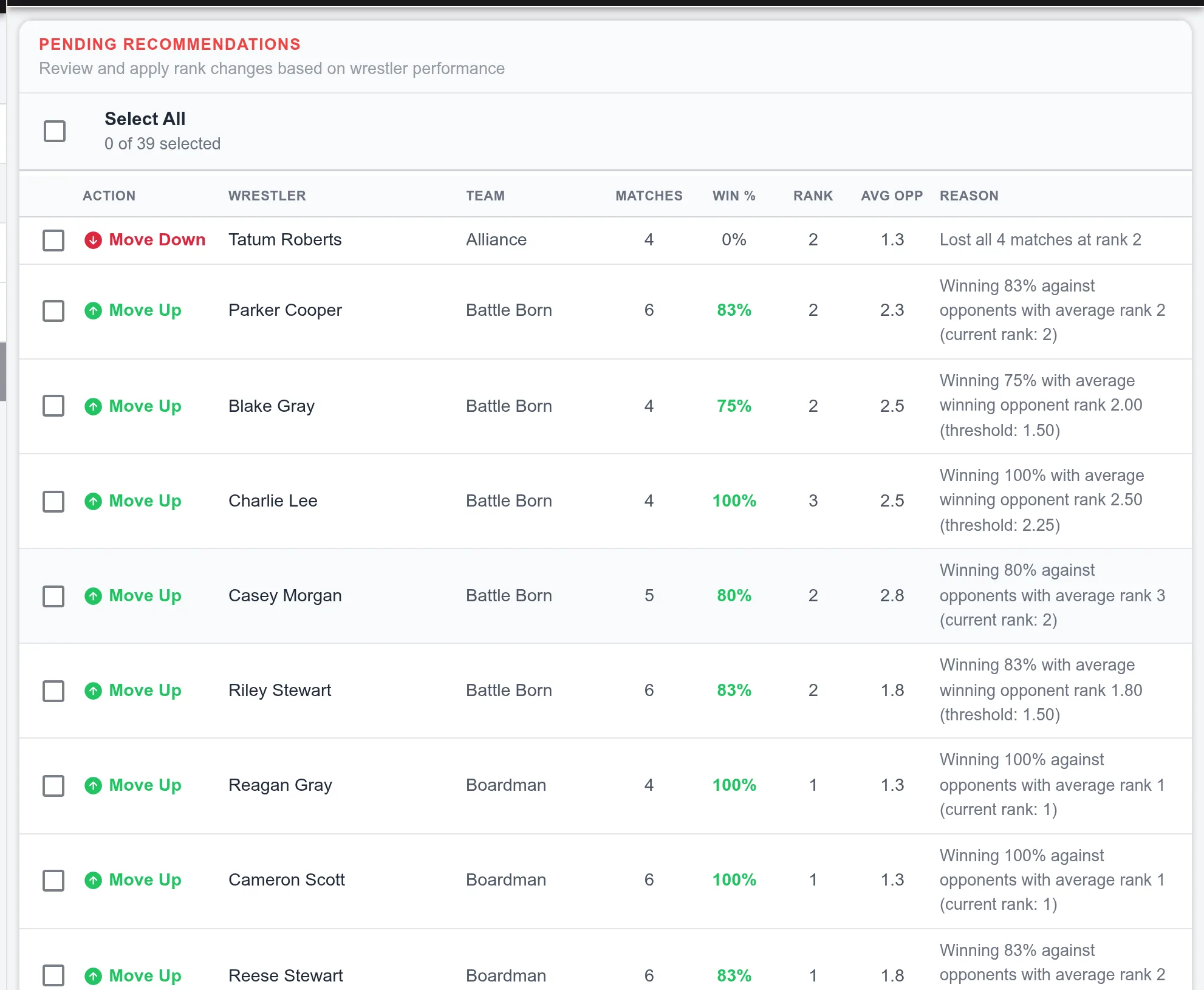
From there, the system evaluates skill rank, weight, age, performance, team, and previous opponents. It can create individual bouts, developmental groups, placement brackets, or complete placement pools while respecting the league's rules and avoiding teammate pairings and repeat matches whenever possible.
Results feed back into the ratings each week, reducing the limits of a one-time subjective coach ranking. As the season develops, the data gets better and the matchups get better with it.
What used to consume 10–20 hours during the week, plus a Sunday morning scramble, can now happen after check-in, using the wrestlers who are actually in the gym.
Other leagues noticed. They asked if they could use it. So we kept building.
Where We Are Now
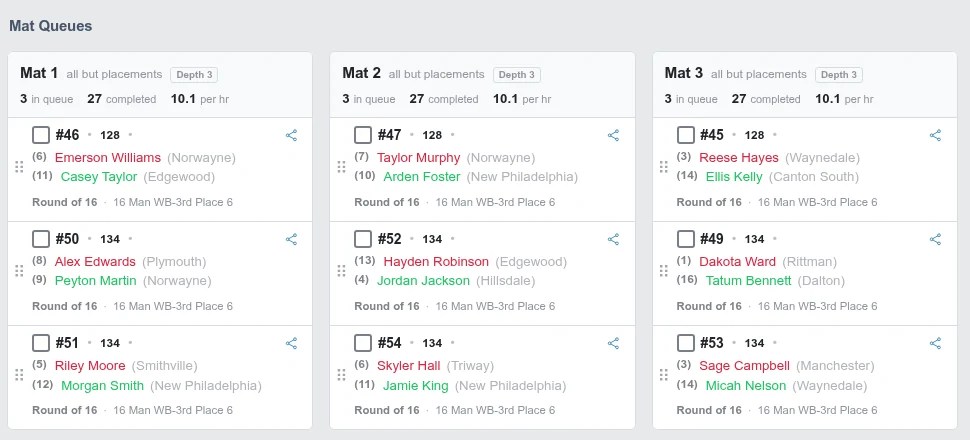
Snapdown now runs leagues, tournaments, the scoring table, and the app in the stands. Matchmaking, brackets, the Mat Control Center, live results, and a season of stats behind every wrestler.
The point hasn't changed: make running wrestling events less painful.
We started with youth leagues and expanded to clubs, open tournaments, and events of all sizes. If you're running wrestling, we're building for you.
Wrestling operations are genuinely complicated. Weights change, kids scratch, a mat runs behind, a coach wants results before he reaches the parking lot. For years the software's answer was to hand all of that back to the director and call it a feature list. That is the part we think is unnecessary.
So: powerful where it matters, simple everywhere we can make it. The price is on the site, the practice event is free, and the person who answers your email has run the event you're describing.
How We Build
The little things aren't little
How many clicks a common action takes. Whether the next thing you need is already on screen. Whether a correction means rebuilding the event. That is what we argue about.
Built for volunteers
Most directors aren't IT people, and the person working the table got asked ten minutes ago. It has to be learnable on the spot, with clear documentation behind it.
No surprises
The standard prices are on the website, not behind a form and never a percentage of your registration. A series gets a discount, and we will quote that plainly too.
Snapdown · 2025–26 season
- 200+
- Teams
- 10K+
- Wrestlers
- 50K+
- Matches
Tell us how your league runs.
We’ll walk through how Snapdown would fit your weekly events.
Request a practice event and run a practice season weekend in it first.